
Related News
- 00
0000-00
Metal Transformation in Strip Processing: From Slab Reheating to Gauge Control - 00
0000-00
High-Recovery Mineral Dressing: Process Choices for Fine and Complex Ores - 00
0000-00
How to Vet a Construction Supply Solutions Supplier for Delivery, Quality, and Lead-Time Risk - 00
0000-00
How Refining Plant Systems Improve Metal Purity and Control Operating Costs - 00
0000-00
Electric Arc Furnace Systems in Latin America: How to Assess Grid, Scrap, and EAF Capacity
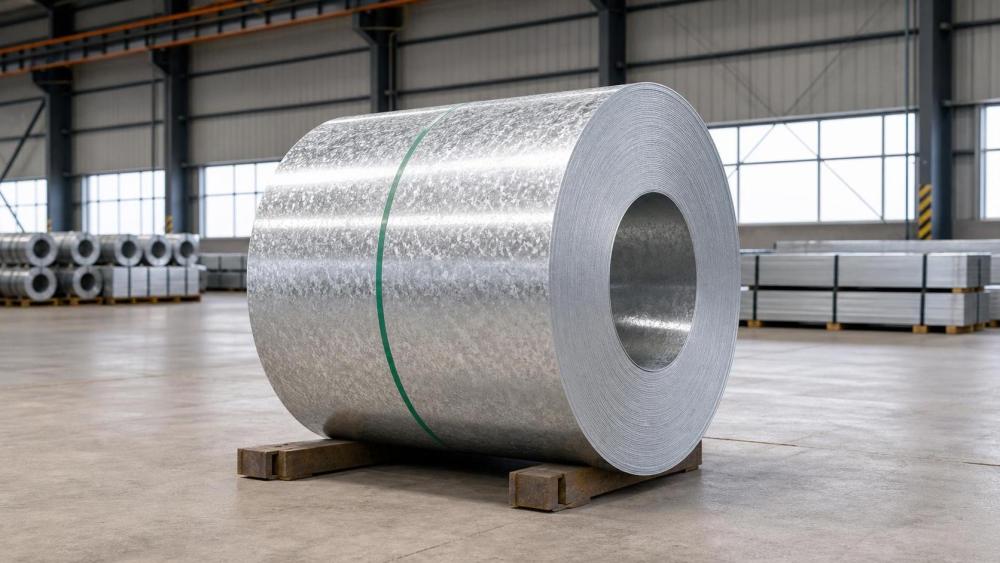
Selecting the right steel material is not only a purchasing task. For construction contractors, roofing sheet manufacturers, HVAC producers, appliance factories, warehouse builders, solar mounting suppliers, and metal processors, material selection directly affects production efficiency, product durability, customer satisfaction, and long-term cost control. Among coated steel products, galvanized steel coil has become one of the most widely used options because it combines steel strength with zinc-based corrosion protection. For buyers evaluating galvanized steel coil, the best decision should be based on application conditions, coating quality, mechanical properties, processing needs, standards, packaging, and supplier reliability.
Galvanized steel coil is used in many industries because it offers practical value. It can be slit, cut, roll formed, stamped, bent, painted, profiled, or fabricated into finished products. It is commonly used for roofing sheets, wall panels, ducts, cable trays, doors, enclosures, furniture parts, agricultural buildings, automotive components, appliance panels, structural accessories, and solar mounting systems. However, not every coil is suitable for every application. A coil selected only by price may create problems during forming, coating, installation, or long-term outdoor use.
A structured selection process helps buyers reduce risk. Instead of asking only whether a supplier has galvanized coil in stock, buyers should confirm whether the coil matches the project environment, production process, and expected service life.
Start With the Final Application
The first step is to identify how the galvanized steel coil will be used. A coil intended for roofing is different from a coil used for appliance panels or ductwork. A roofing product may require stronger corrosion resistance, stable coating weight, good profile forming performance, and surface consistency. An appliance component may require smoother surface appearance, tighter thickness tolerance, and better paintability. An HVAC duct may require easy forming, dimensional stability, and practical cost efficiency.
Outdoor applications normally require stronger corrosion protection. Rain, humidity, temperature change, air pollution, and coastal environments can accelerate rust if the zinc coating is insufficient. For roofing sheets, wall panels, fences, agricultural buildings, and solar support structures, buyers should pay close attention to zinc coating weight and surface protection.
Indoor applications may allow lighter coating depending on the environment. For example, dry indoor metal parts may not require the same corrosion resistance as coastal roofing materials. This distinction matters because higher coating weight can increase cost. The best choice is not always the heaviest coating, but the coating level that matches the application environment.
Evaluate Zinc Coating Weight Carefully
Zinc coating is the core value of galvanized steel coil. It protects the steel substrate by forming a barrier against moisture and oxygen. It also provides sacrificial protection, helping protect exposed areas when minor scratches occur.
Buyers should confirm the required zinc coating weight before ordering. Common coating specifications may vary by market and standard. Higher zinc coating generally improves corrosion resistance, but it may also affect surface appearance, forming behavior, and cost. For outdoor construction products, higher coating weight is often preferred. For indoor processing, moderate coating may be sufficient.
The coating must also be consistent. Uneven zinc distribution can create weak protection areas and affect product quality. If the coil will be roll formed into roofing sheets or wall panels, consistent coating helps maintain predictable performance across the finished product.
Buyers should ask suppliers for coating information and, when necessary, test reports. For long-term projects or repeat orders, stable coating consistency is more important than one-time low pricing.
Match Steel Grade to Processing Requirements
Galvanized steel coil is available in different grades. Some grades are designed for general forming, while others are better for deep drawing, structural use, or higher strength applications. The wrong grade can cause cracking, springback, poor forming, or insufficient strength.
For general roofing, cladding, and light fabrication, buyers may use common commercial grades. For parts requiring bending, stamping, or deep drawing, better formability may be needed. For structural components or load-related applications, yield strength and tensile strength become more important.
Buyers should review mechanical properties such as yield strength, tensile strength, elongation, and hardness. Elongation is especially important for forming. If the material is too hard or lacks ductility, it may crack during bending or roll forming.
The steel grade should match the production process. A buyer using continuous roll forming equipment needs a coil that feeds smoothly and forms consistently. A stamping factory may need more stable ductility and surface quality. A construction material producer may focus on strength, coating, and profile accuracy.
Thickness and Width Tolerance Affect Production Efficiency
Thickness is one of the most basic but important selection factors. It affects strength, weight, forming behavior, cost, and finished product performance. A thicker coil may provide stronger rigidity but increase material cost and equipment load. A thinner coil may reduce cost but may not meet structural or durability requirements.
Tolerance is just as important as nominal thickness. If thickness varies too much, finished products may have inconsistent strength or dimensional accuracy. In roll forming, unstable thickness can affect profile shape, equipment adjustment, and final product fit.
Width tolerance also matters. Slitting, feeding, and forming operations require predictable coil width. Poor width control can create edge problems, misalignment, or waste. Buyers using automated production lines should place greater emphasis on dimensional consistency.
For export procurement, buyers should clearly state required thickness, width, tolerance, coil weight, inner diameter, and outer diameter. These details help avoid misunderstanding and improve production planning.
Surface Quality Should Match the Finished Product
Surface quality is an important factor in galvanized steel coil selection. Different applications require different appearance levels. Some industrial uses can accept minor surface variation, while visible panels, appliance parts, and painted products need better surface consistency.
Buyers should evaluate spangle, surface smoothness, scratches, oil stains, zinc defects, edge condition, and passivation quality. If the coil will be painted or coated later, surface cleanliness and chemical treatment are important. Poor surface condition can reduce paint adhesion or create appearance defects.
For roofing and cladding, surface appearance affects market value. Customers often judge product quality visually. Even if mechanical performance is acceptable, obvious defects may reduce acceptance.
If the product will be used in concealed industrial parts, appearance may be less important than coating performance and processability. The key is matching surface requirements to the real application, rather than overpaying for unnecessary appearance levels or under-specifying visible products.
Consider Forming, Cutting, and Roll Forming Performance
Galvanized steel coil is often processed through roll forming, cutting, bending, punching, stamping, or profiling. Processing performance should be evaluated before ordering.
Roll forming is common in roofing sheet, wall panel, purlin, and profile production. The coil must have suitable ductility and stable thickness. If the material is too hard or inconsistent, it may cause cracking, uneven profile shape, or equipment adjustment problems.
Cutting and slitting also require good edge quality. Burrs, edge waves, or poor slitting can affect downstream processing. Buyers who need narrow strips or precision parts should confirm slitting capability and edge requirements.
Bending and stamping require attention to elongation and coating adhesion. During forming, zinc coating should remain attached without peeling. If coating adhesion is poor, finished parts may lose corrosion protection in formed areas.
Production testing is useful when buyers are changing suppliers or using a new grade. A small trial order can help verify whether the coil works well with existing equipment.
Confirm Standards and Documentation
International buyers should confirm applicable standards before purchase. Galvanized steel coil may be supplied according to different standards depending on market requirements. Buyers should specify grade, coating weight, thickness tolerance, surface treatment, and testing requirements.
Documentation is important for project approval, customs clearance, resale, and quality control. Buyers may request mill test certificates, coating reports, chemical composition, mechanical properties, and packing lists. For large orders, third-party inspection may also be considered.
Equivalent grades should be reviewed carefully. A grade from one standard may appear similar to another, but differences in chemical composition, mechanical properties, or coating requirements may exist. Buyers should not rely only on informal grade comparisons.
Clear documentation improves trust and reduces disputes. A supplier that can provide complete and accurate technical documents is often more reliable for long-term cooperation.
Packaging and Transport Protection Are Critical
Galvanized steel coil can be damaged during storage and transportation if packaging is poor. Moisture, impact, edge damage, and improper handling can reduce product quality before it reaches the buyer.
Export packaging should protect the coil from water, rust, deformation, and mechanical damage. Buyers should confirm packaging method, coil orientation, inner protection, outer wrapping, edge protection, straps, labels, and moisture prevention. For sea freight, waterproof packaging is especially important.
Coil weight should also match the buyer’s handling equipment. A coil that is too heavy may create unloading or feeding problems. A coil that is too small may increase handling frequency and cost. Buyers should specify preferred coil weight range before ordering.
Good packaging is not cosmetic. It protects material value and helps ensure that the coil can be used efficiently after delivery.
Evaluate Supplier Capability and Consistency
A good galvanized steel coil supplier should provide more than a product quote. Buyers should evaluate production capability, inventory range, grade options, coating consistency, processing service, documentation support, export experience, and communication efficiency.
Consistency is especially important for repeat buyers. A single acceptable shipment is not enough if future batches vary in thickness, coating, surface quality, or mechanical properties. Long-term buyers should select suppliers that can maintain stable quality over time.
Processing capability may also matter. Some buyers need slitting, cutting, custom coil weight, special packaging, or mixed specifications. Suppliers with value-added processing can help buyers reduce workload and improve flexibility.
Communication is part of supplier quality. International steel procurement often involves technical confirmation, shipping schedules, inspection details, and document review. Responsive suppliers reduce risk and help buyers make faster decisions.
Balance Price With Total Value
Price is always important in steel procurement, but the lowest price may not be the best option. Buyers should evaluate total value, including material performance, processing efficiency, defect rate, delivery reliability, packaging quality, documentation, and supplier support.
A low-cost coil that causes forming cracks, coating defects, delivery delays, or customer complaints can become expensive. A slightly higher-priced coil with stable quality may reduce waste and improve production efficiency.
Total value is especially important for manufacturers producing finished goods. If galvanized steel coil is converted into roofing sheets, panels, ducts, or appliance parts, material problems can affect the entire production batch. Buyers should calculate the cost of rework, downtime, scrap, and customer claims when comparing offers.
Build a Practical Buyer Checklist
Before purchasing galvanized steel coil, buyers should confirm the application, environment, grade, thickness, width, zinc coating, surface treatment, surface quality, tolerance, coil weight, processing method, packaging, documentation, and delivery schedule.
For outdoor use, corrosion resistance and coating weight should receive more attention. For forming applications, mechanical properties and coating adhesion are critical. For visible products, surface appearance matters. For automated production lines, dimensional consistency and coil shape are essential.
A written specification helps both buyer and supplier. It reduces misunderstanding and provides a reference for inspection. For repeat orders, maintaining the same specification helps stabilize production.
Outlook: Better Selection Creates Stronger Procurement Results
Galvanized steel coil will continue to play an important role in construction, manufacturing, appliances, HVAC, automotive parts, infrastructure, and renewable energy support systems. Its popularity comes from a practical combination of strength, corrosion resistance, processability, and cost efficiency.
However, as buyers become more professional, selection standards are rising. Procurement teams are paying more attention to coating consistency, grade suitability, surface quality, documentation, packaging, and supplier reliability. This shift favors suppliers that can provide clear specifications and stable export support.
For global buyers, the best approach is to treat galvanized steel coil selection as a structured evaluation process. By matching the material to the application, confirming coating and grade requirements, checking processing performance, and evaluating supplier capability, buyers can reduce risk and improve long-term value.
In competitive industrial markets, the right galvanized steel coil is not just a raw material. It is the foundation for durable products, efficient production, reliable delivery, and stronger customer confidence.
Related News
- Metal Transformation in Strip Processing: From Slab Reheating to Gauge ControlSep 19, 2026Metal transformation for strip processing: explore how reheating, descaling, rolling, cooling, and AGC enable repeatable gauge control, quality, and yield.
- How Long Does It Take to Commission a Precision Stainless Steel Rolling Line?Sep 08, 2026How long does it take to commission a precision rolling line for stainless steel? Explore realistic timelines, key phases, and ways to achieve stable, high-quality output.
- How do mill housing wear-resistant components prevent rolling mill downtime?Sep 06, 2026Mill housing wear-resistant components help prevent rolling mill downtime by preserving alignment, reducing wear, and protecting critical structural surfaces.
- How Thickness and Surface Finish Shape Nickel-based Alloy Strip PerformanceSep 04, 2026Nickel-based Alloy Steel Strips: discover how thickness tolerance and surface finish improve forming, welding, corrosion resistance, and component reliability.