
Related News
- 00
0000-00
Metal Transformation in Strip Processing: From Slab Reheating to Gauge Control - 00
0000-00
High-Recovery Mineral Dressing: Process Choices for Fine and Complex Ores - 00
0000-00
How to Vet a Construction Supply Solutions Supplier for Delivery, Quality, and Lead-Time Risk - 00
0000-00
How Refining Plant Systems Improve Metal Purity and Control Operating Costs - 00
0000-00
Electric Arc Furnace Systems in Latin America: How to Assess Grid, Scrap, and EAF Capacity
Choosing the wrong metallurgical equipment can trigger costly downtime, safety risks, and long-term productivity losses across complex industrial projects. For project managers and engineering leaders, understanding the most common selection mistakes is essential to protecting budgets, schedules, and plant performance. This article examines where equipment decisions often go wrong and how to align specifications with real production demands.
For most readers searching “metallurgical equipment” in the context of downtime, the real question is not simply which machine is best. It is how to avoid buying or specifying equipment that looks acceptable on paper but fails under real operating conditions. Project leaders usually want to reduce unplanned shutdowns, protect capital expenditure, and make sure the selected system can support throughput, quality, compliance, and maintenance needs over the long term.
The biggest selection mistakes rarely come from one bad specification alone. They usually result from a mismatch between process reality and procurement logic: choosing by nameplate capacity, underestimating feed variability, overlooking utility constraints, ignoring maintenance access, or selecting equipment without considering integration across the line. In metallurgical projects, downtime often starts long before commissioning. It starts in the selection stage.
Why equipment selection errors create disproportionate downtime risk
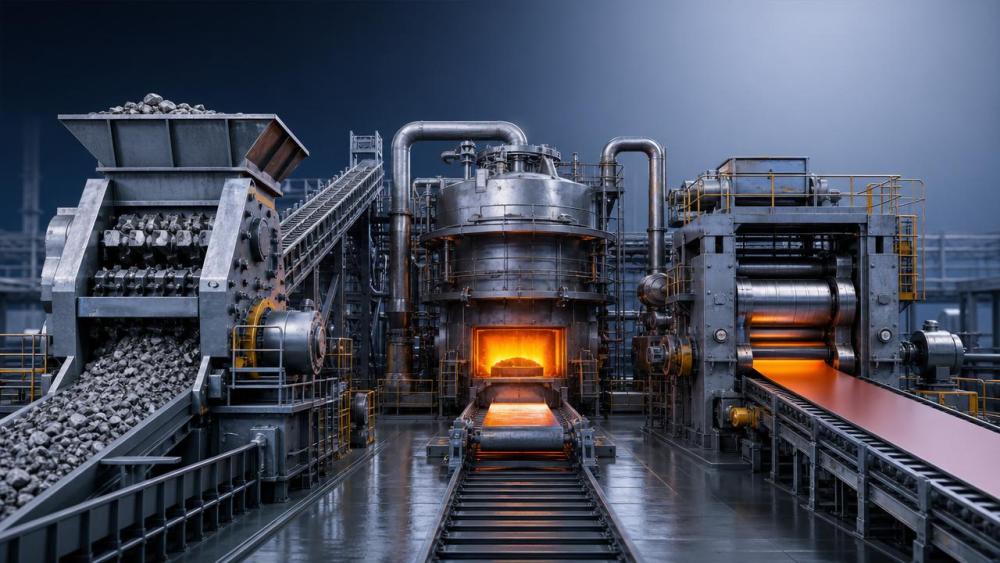
In metallurgy, equipment operates inside tightly linked process chains. A bottleneck in crushing affects beneficiation. A temperature-control issue in the furnace affects refining stability. A weak rolling stand affects thickness consistency, coil yield, and downstream handling. Because these systems are highly interdependent, one poor equipment decision can create repeated stoppages far beyond the asset itself.
For project managers, this makes equipment selection a business continuity issue rather than a technical detail. A machine that is slightly under-specified, difficult to maintain, or incompatible with upstream and downstream systems can generate hidden costs through reduced availability, delayed ramp-up, off-spec production, higher spare consumption, and more frequent emergency interventions.
This is especially true in large-scale mineral machinery, smelting and refining plants, continuous casting and rolling lines, foil rolling mills, and industrial cooling or dedusting systems. In each case, downtime is rarely just lost operating hours. It can also mean energy waste, safety exposure, environmental non-compliance, scrap generation, and customer delivery risk.
Mistake 1: Selecting metallurgical equipment by nominal capacity instead of real operating envelope
One of the most common mistakes is treating nameplate capacity as the primary decision factor. A crusher rated for a target tonnage, a furnace designed for a certain melt volume, or a rolling mill advertised for a certain speed may still underperform if actual operating conditions differ from the assumptions behind those ratings.
Project teams often face pressure to compare vendors using simple headline figures. But metallurgical equipment should be evaluated within the full operating envelope: raw material variability, moisture, particle size distribution, impurity levels, ambient temperature, cycle pattern, energy fluctuation, and operator skill. If those conditions are not captured in the specification basis, downtime risk increases from day one.
For example, in mineral processing, equipment that performs well with uniform ore can become unstable when feed hardness changes. In smelting, a furnace can struggle if the charge mix varies more than expected. In rolling, speed targets may be meaningless if the system cannot maintain tension, cooling stability, and thickness control under real production conditions.
A better approach is to define expected, normal, and worst-case operating windows. Ask suppliers to confirm performance not just at ideal design point, but across actual process variability. This helps project leaders avoid overconfidence based on laboratory conditions or marketing claims.
Mistake 2: Ignoring upstream and downstream integration
Another major source of downtime is selecting equipment as a standalone purchase instead of as part of a production system. Metallurgical facilities depend on sequencing, timing, material flow, temperature continuity, dust control, cooling balance, automation logic, and maintenance coordination. If one asset is chosen without considering these links, the entire line can become unstable.
Integration failures appear in many forms. Transfer points may choke because conveyor discharge does not match receiving equipment geometry. Furnace tapping rhythm may not align with casting speed. Rolling line automation may not communicate properly with gauge control, lubrication, or coiling systems. Dedusting units may be sized for average emissions rather than peak process events.
These problems are especially dangerous because they often emerge after installation, when correction is expensive and schedules are already tight. Project managers should insist on line-level process reviews before final equipment approval. That means checking interfaces, controls, utility demand, foundation loads, access routes, and shutdown dependencies.
If a vendor only guarantees their own package without clear responsibility for system interaction, the project inherits coordination risk. In practice, many “equipment failures” are actually interface failures between mechanical, electrical, automation, and process design assumptions.
Mistake 3: Underestimating maintenance reality and spare parts strategy
Some metallurgical equipment looks efficient in a proposal but becomes a maintenance burden in operation. This happens when selection teams focus heavily on acquisition cost and process performance while giving too little weight to service intervals, component wear, access for replacement, local parts availability, and technician skill requirements.
Downtime rises quickly when critical components are difficult to inspect, require complete shutdown for routine servicing, or depend on long-lead imported parts. In harsh metallurgical environments, wear is not an exception. It is a certainty. Liners, rollers, seals, refractories, bearings, filters, pumps, and instrumentation all need practical replacement strategies.
Project leaders should ask operational questions early: Can wear parts be changed safely and quickly? Are there local service partners? Which components are custom and which are standard? What is the realistic lead time for critical spares? What preventive maintenance intervals are based on comparable operating references rather than ideal assumptions?
Total cost of ownership matters more than purchase price in heavy industry. A lower-cost unit that adds repeated shutdowns, emergency labor, and inventory stress can become the more expensive choice within the first year. Good metallurgical equipment selection includes maintainability, parts resilience, and service support as core decision criteria.
Mistake 4: Failing to account for utility and environmental constraints
Many downtime events begin with support systems rather than primary process machinery. Metallurgical equipment depends on stable power quality, cooling water, compressed air, gas supply, lubrication, fume extraction, and wastewater or dust handling. If these utility conditions are assumed rather than verified, the selected equipment may never operate reliably at intended performance.
For example, electric arc furnace support systems may face unstable energy conditions. Continuous casting and rolling lines can suffer from insufficient cooling capacity or poor water quality. Dedusting systems can lose effectiveness if airflow design ignores actual particulate load peaks. Foil rolling processes may struggle if temperature control and cleanliness are not maintained tightly enough.
Environmental systems are particularly important because they are often treated as secondary infrastructure. In reality, cooling and dedusting are production enablers. If they are undersized, poorly integrated, or hard to monitor, the plant may experience both regulatory pressure and repeated process interruptions.
Before finalizing equipment choice, project teams should validate utility maps, peak-load scenarios, redundancy philosophy, and environmental compliance requirements. This is where strategic planning adds value: the right machine is not the one that fits only the process; it is the one that fits the plant ecosystem.
Mistake 5: Overlooking raw material variability and future product mix
In metallurgy, today’s process conditions are not always tomorrow’s reality. Ore grades change. Scrap composition shifts. Customer tolerance requirements tighten. New alloy demands emerge. EV-related applications, high-precision foil production, and advanced materials processing all increase pressure on equipment flexibility. Yet many projects still select metallurgical equipment around a narrow initial production case.
This creates downtime when the plant tries to adapt. A sorting system may lose efficiency with changing mineral composition. A smelting unit may become unstable with different feed chemistry. A rolling line may struggle to meet new gauge or surface quality standards. Equipment that lacks flexibility can trap operations between underutilization and unreliable overextension.
Project managers should therefore consider scalability and controllability, not just immediate throughput. Questions worth asking include: What adjustment range is available? How much feed variability can the system absorb? Can controls be upgraded? Can wear packages or process modules be adapted for future products? Is the equipment proven only in one narrow application, or across a broader industrial range?
Flexibility does not mean paying for every possible feature. It means identifying where process uncertainty is highest and ensuring the selected asset can handle realistic change without chronic stoppages.
Mistake 6: Weak vendor evaluation and insufficient performance verification
Another common mistake is choosing a supplier based on commercial responsiveness, price attractiveness, or generic references instead of rigorous fit-for-purpose evaluation. In complex heavy industrial projects, vendor quality is not only about machine fabrication. It includes process understanding, engineering depth, installation support, commissioning capability, documentation quality, and after-sales accountability.
Project managers should be cautious when a supplier’s references come from different feed conditions, lower production intensity, or less demanding quality requirements. A technically impressive proposal may still carry significant execution risk if the vendor has limited experience integrating with similar metallurgical lines or local operating environments.
Performance verification should go beyond brochures. Useful checks include reference visits, detailed technical clarification sheets, lifecycle cost review, failure mode discussions, control philosophy review, and realistic acceptance criteria. If pilot testing, simulation, or process guarantees are possible, they should be tied clearly to site conditions.
Strong supplier evaluation reduces the chance of post-installation disputes where the vendor blames operations and operations blame the vendor. The more specific the process basis and performance obligations, the lower the ambiguity during ramp-up.
How project managers can reduce downtime risk before purchase approval
To avoid these selection mistakes, project and engineering leaders need a practical decision framework. First, define success in operating terms, not procurement terms. The question is not whether the equipment meets a catalog specification. The question is whether it can deliver stable throughput, target quality, maintainability, and compliance under site-specific conditions.
Second, build cross-functional review into the selection process. Operations, maintenance, process engineering, automation, EHS, and procurement should all evaluate the equipment from their own perspective. Downtime often comes from what one function assumed another had checked.
Third, evaluate equipment using scenario-based risk review. Consider startup conditions, raw material changes, utility interruptions, wear behavior, emergency access, and partial-load operation. This is far more useful than comparing only CAPEX and nominal performance.
Fourth, define non-negotiables early. These may include spare parts localization, service response time, automation compatibility, maintainability standards, redundancy needs, or environmental thresholds. Clear decision gates protect projects from late-stage compromises that create long-term operational pain.
Finally, treat metallurgical equipment selection as a strategic productivity decision. In sectors where every stoppage can ripple through furnaces, mills, cooling systems, logistics, and customer commitments, the quality of the early selection process strongly shapes the plant’s future uptime curve.
Conclusion: the best equipment choice is the one that survives real production conditions
Downtime caused by poor metallurgical equipment selection is rarely random. It usually reflects preventable gaps in specification, integration, maintenance planning, utility assessment, flexibility analysis, or vendor validation. For project managers and engineering leaders, the most reliable way to reduce future shutdowns is to select equipment based on real operating conditions rather than simplified purchase comparisons.
The right decision balances throughput, process stability, serviceability, environmental fit, and long-term adaptability. In heavy industrial systems, a machine that performs reliably across variable conditions is often more valuable than one that promises higher peak output under ideal assumptions. When equipment choices are aligned with the full production reality, plants gain not only better uptime, but also stronger safety, cost control, and project confidence.
Related News
- Industrial Solutions Performance Review: Which KPIs Matter Before Scaling a Plant?Sep 12, 2026Industrial solutions performance review: identify the KPIs for throughput, yield, energy, reliability, quality, and compliance before scaling your plant.
- Molten Metal Smelting in Latin America: Capacity, Energy Costs, and Investment RisksSep 08, 2026Molten smelting Latin America: assess usable capacity, delivered energy costs, logistics, and investment risks to identify resilient metal project opportunities.
- Mineral Sorting Cost: How Equipment, Capacity, and Operating Expenses Shape PricingSep 07, 2026Mineral sorting cost depends on equipment, capacity, feed preparation, and operating expenses. Explore practical cost factors to compare solutions and improve ROI.
- Which Metal Market Trends Should Guide Long-Term Equipment Investment?Sep 12, 2026What metal market trends affect long-term equipment investment decisions? Explore demand, energy, recycling, automation, and resilient metal processing strategies.